

The heating, ventilation, air conditioning, and refrigeration (HVAC-R) industry stands at a critical crossroads. As technological innovations accelerate, environmental regulations tighten, and sustainability becomes a central focus, the industry faces a widening skills gap that threatens its ability to meet growing demands.
This gap—the disconnect between the skills possessed by the available workforce and those required by employers—has emerged as one of the most pressing challenges in the HVAC-R sector globally.
The HVAC-R industry’s importance cannot be overstated. From preserving food safety in the cold chain to ensuring human comfort in buildings, from supporting critical healthcare infrastructure to enabling industrial processes, refrigeration and air conditioning systems are foundational to modern society.
During his presentation at the 2025 Ozone2Climate Technology Industry Roundtable: Good Practices in the Servicing Sector in Shanghai, China, Mr Mohd Zaki Mohamed emphasised that, with intensifying climate change concerns, the industry must transform to reduce its environmental footprint through energy-efficient technologies and climate-friendly refrigerants.
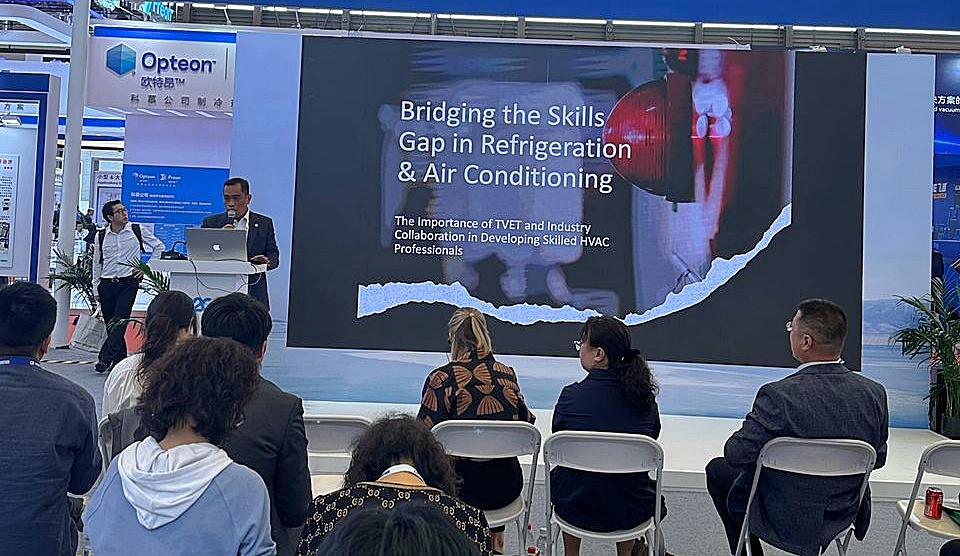
“Technical and Vocational Education and Training (TVET) institutions serve as the primary pipeline for developing the skilled technicians needed in this field. However, a significant disconnect exists between traditional TVET curricula and the rapidly evolving demands of the industry
“Without strong collaboration between educational institutions and industry stakeholders, this gap will continue to widen, creating barriers to industry growth, technological adoption, and sustainability goals,” said Mr Mohd Zaki, who serves as the Director of Universiti Kuala Lumpur (UniKL) WorldSkills & Teaching Factory Division, when invited as one of the speakers.
Mr Mohd Zaki added that energy efficiency has also become a major concern, as buildings account for approximately 40% of global energy consumption with HVAC systems responsible for a significant portion.
As countries implement more stringent energy performance standards, the industry must adopt high-efficiency equipment and optimise system design and operation. This transition demands technicians capable of installing, commissioning, and maintaining these sophisticated systems to achieve their intended performance levels.
“Simultaneously, the integration of digital technologies has revolutionised HVAC-R systems. Modern equipment increasingly incorporates IoT sensors, automated controls, and smart diagnostic capabilities.
“These converging trends have created a surge in demand for technicians with specialised knowledge. Industry projections suggest that HVAC-R technician employment will grow significantly faster than average across most developed and developing economies over the next decade. However, this growing demand faces a critical obstacle: the shortage of properly trained personnel,” he further noted.
As one of the national experts in the area of refrigeration, where refrigeration has become a specialised area of study, he shared that the sector employs approximately 15 million people worldwide—encompassing roles in manufacturing, installation, maintenance, and servicing of refrigeration and air conditioning equipment.
Hence, the anticipated growth in the RAC sector underscores the urgent need to develop comprehensive TVET programmes that equip technicians with the necessary skills to meet industry demands.
This includes policy development and fostering collaborations between educational institutions and industry stakeholders to ensure curriculum relevance and practical training opportunities.
As the HVAC-R industry evolves in response to climate imperatives and technological advances, institutions like UniKL are stepping up to close the skills gap. At the forefront is UniKL MFI, equipping students not just with technical competencies, but also with industry-relevant knowledge in energy efficiency, digital integration, and climate-friendly systems.
For demand continues to surge globally and regionally, UniKL’s role in shaping competent, climate-conscious HVAC-R professionals positions Malaysia as a key player in sustainable cooling solutions for the future.
Source: UniKL Xpress